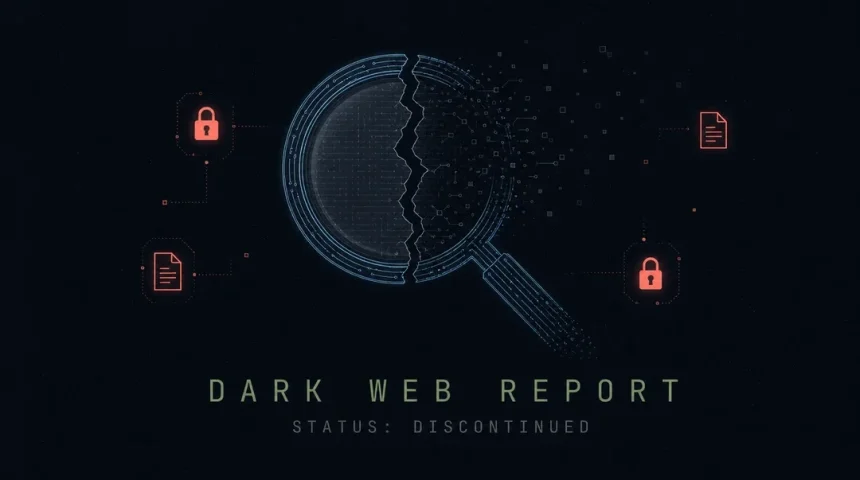
Starting from the 16th of February 2026, Google dark web report shut down its operation completely. This comes after Google made the official announcement in mid-December 2025, first reported by 9to5Google, ending a tool that had launched in March 2023 and had only been available to all Google account holders since July 2024. On January 15, 2026, the tool ceased to scan, and on February 16, 2026, all service data was erased and the entire service was shut down.
According to Google, the tool provided people with general information, but feedback showed it didn’t offer actionable next steps whenever their information appeared on the dark web. Google is now concentrating on its other security features, such as Security Checkup and Password Manager, instead of the dark web surveillance tool. If you have already had an alert and want the practical version of those missing next steps, our guide on what to do if your information is on the dark web walks through them step by step.
Now that Google has withdrawn, there are several recommended Google dark web report alternatives that users can use to proactively monitor whether their information has been leaked on the dark web. If you are interested in knowing the full details about what happened to the dark web report, why Google pulled it, and what users may have lost, then continue reading this blog post. We’ve provided an in-depth review, covering everything you need to know about why Google killed its dark web report. Without further delay, let’s dive in!
What Is The Google Dark Web Report?
Before we dive into why Google pulled the plug on its Dark Web report on data breaches, let’s first look at what the Dark Web is and how it functions. This is important because some of you may not be familiar with what the tool really is.
The dark web is a little portion of the deep web, containing content that won’t load on your regular web browser or appear in Google searches. It is designed as an encrypted platform that offers anonymity and secures communication. However, cybercriminals exploit its anonymity for criminal activities. We cover this distinction in full in what is the dark web and in our breakdown of deep web vs dark web.
One of the major attacks on individuals and organisations on the dark web is identity theft. To tackle this, monitoring software was designed with features to track users’ stolen personal information on the dark web and alert them of a data breach if detected. One of these tools is the Google Dark Web Report.
The Dark Web Report was introduced by Google in March 2023, initially as a perk for Google One subscribers, and was rolled out to all Google account holders in July 2024. Just like most monitoring software, it was a tool designed for tracking leaks of personal information that users could choose to use. The service looked through hidden areas of the internet, like the dark web, for your personal information, such as phone number, email address, name, and even Social Security numbers. The aim was to notify you if your data was detected on the dark web. It is worth noting that the feature was only ever available on consumer Google accounts — Workspace and supervised accounts were never eligible.
The report outlining the compromised data would be sent to you. This warning could be frightening but helpful. The tool was meant to give you more control over any personal information you may have on the internet. But what happened to this monitoring tool? Why did Google shut down its dark web report?
Why is Google Shutting Down The Dark Web Report?
After announcing the halt to the Google dark web report, Google publicly stated its reasons for shutting down the project. The major reason was the feedback Google had received on the dark web report, which indicated that the tool didn’t go far enough to be useful.
According to Google, while the report offered general information, feedback showed that it failed in one critical stage by not providing helpful next steps to actually fix the problem.
This is a great concern, because it will be quite alarming and frustrating to discover that your personal information, such as phone number, email address, name, and even Social Security numbers are being circulated on the dark web. It becomes more frustrating if you don’t really know the exact measures or a step-by-step guide on what to do next in order to swiftly reduce the damage the breach can cause and recover control of your personal information (if possible).
So, because the program did not provide users with clear instructions on how to handle the report they had received, Google judged it to be falling short of its purpose. In its own words:
“While the report offered general information, feedback showed that it didn’t provide helpful next steps. We’re making this change to instead focus on tools that give you more clear, actionable steps to protect your information online.”
— Google, in the email sent to Dark Web Report users
Google acted on that feedback and shut down the dark web report, despite the feature having been in operation for roughly three years. Users were simply informed by email that the tool would be discontinued and their data would be taken down.
Google Dark Web Report Shut Down: The Exact Timeline
According to the email that was sent by Google to its dark web report users, the shutdown happened in two stages in early 2026. Here is how Google discontinued its dark web report tool:
Phase 1 — January 15, 2026: scanning stopped
The first phase of the shutdown happened on the 15th of January, 2026. On this day, the program stopped searching the dark web for fresh findings. That’s because Google ceased to monitor the dark web to detect new data breaches.
Phase 2 — February 16, 2026: service and data deleted
The Dark Web Report function then permanently vanished on February 16, 2026. All user information (which included monitoring profiles and reports) associated with this service was deleted from Google’s servers. This was when the entire service was shut down.
How Did Users Remove Their Data and Report During the Google Dark Web Report Shut Down?
Before the shutdown timeline, users were able to delete their data and report personally from the Google server. They didn’t have to wait for Google to remove their data. Here’s how it happened. Users would:
- Go to the Dark Web Report page on their computer.
- Click Edit monitoring profile beneath “Results with your info.”
- Click Delete monitoring profile at the bottom, then click Delete to confirm.
They would immediately lose access to their report once they removed their profile. This process is no longer available — the page was retired along with the rest of the service on February 16, 2026, and all remaining monitoring profiles were deleted by Google at that point.
Maintaining your online privacy also depends on how you handle other personal information. For example, you can erase your Google search history to further manage your online presence, and use Google’s Results about you tool to request removal of your contact details from Search.
Why Should We Monitor The Dark Web?
As we’ve stated earlier, the dark web consists of content that is not recognised by standard software and browsers; it requires specialised software like Tor to access. It is a layer of the internet that is encrypted and mostly concealed from the general public. But why is it important to track and monitor the dark web?
Monitoring and tracking the dark web is very crucial due to the large amount of content that is available within the layer. Because this layer offers anonymity and secure communication, it became the ideal location for cyber criminals to carry out illegal activities without revealing their identity or IP address, making it nearly impossible for both law enforcement and governing authorities to track down or locate them.
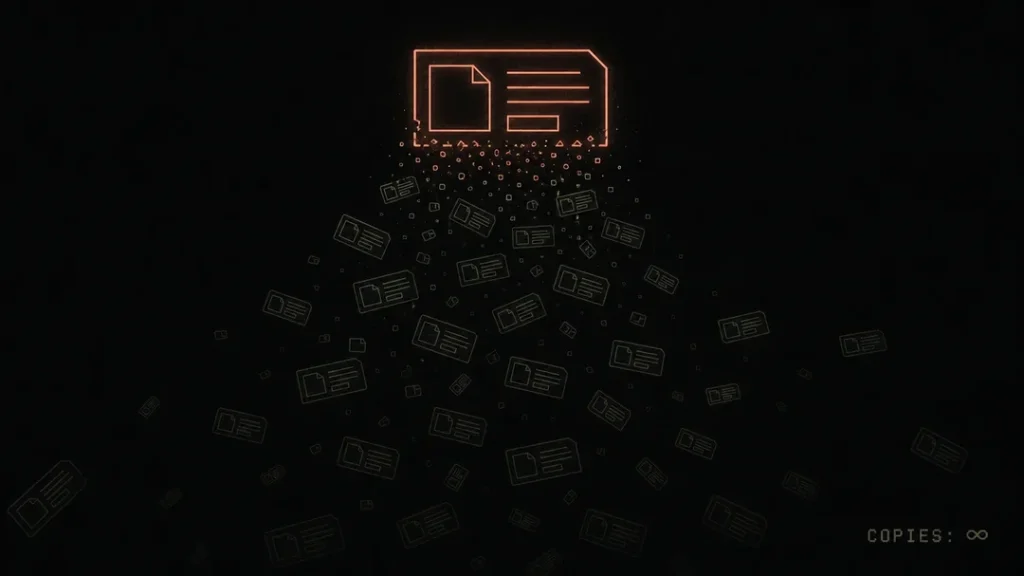
Among other content on the dark web, people’s personal information is the most rampant. This is because, after a data breach or data theft, hackers will dump the stolen personal information onto the dark web. The aim is to trade, give away for free or threaten and exploit victims or companies.
In most cases, this data comprises email address, phone number, social security number, and even passwords — our breakdown of a 4 million-line credential dump shows exactly what one of these files looks like in practice. This is sensitive information that, if it is leaked, victims of the data breach may likely face direct financial loss, identity theft, and emotional distress. In fact, the affected organisation may face a long-term loss in revenue due to criticism and loss of trust.
Therefore, it is very important to track and monitor the dark web for stolen credentials and sensitive data that may be in circulation within the layer. This approach is very necessary because it alerts you to the presence of your data on the dark web. Among these monitoring software is the Dark Web Report, which Google shut down in early 2026.
Even though Google has discontinued the monitoring service, it is worth knowing that this software was designed, initially, to give users a heads up on their details across the dark web (if their details have been dumped and circulating on the dark web).
Users can then do something about their data either by getting in touch with law enforcement or governing authorities and reporting symptoms of identity theft, or by changing their password to protect their accounts from unauthorised access.
It is worth noting that once data or personal information is dumped on the dark web, victims of the data theft can not delete it. However, there are different ways in which they can control their information and protect themselves from hackers and thieves. However, the method mainly depends on the kind of data and how long it has been circulating within the dark web.
While the dark web report alerted users to the presence of their data on the dark web, it didn’t have any features that provided the necessary steps on how to handle the data dump. Hence the shutdown. Nevertheless, with the tool discontinued, there are a number of Google dark web report alternatives you may use as a replacement. They are quite simple and easy to use.
Dark Web Report Replacement – Google Security Services?
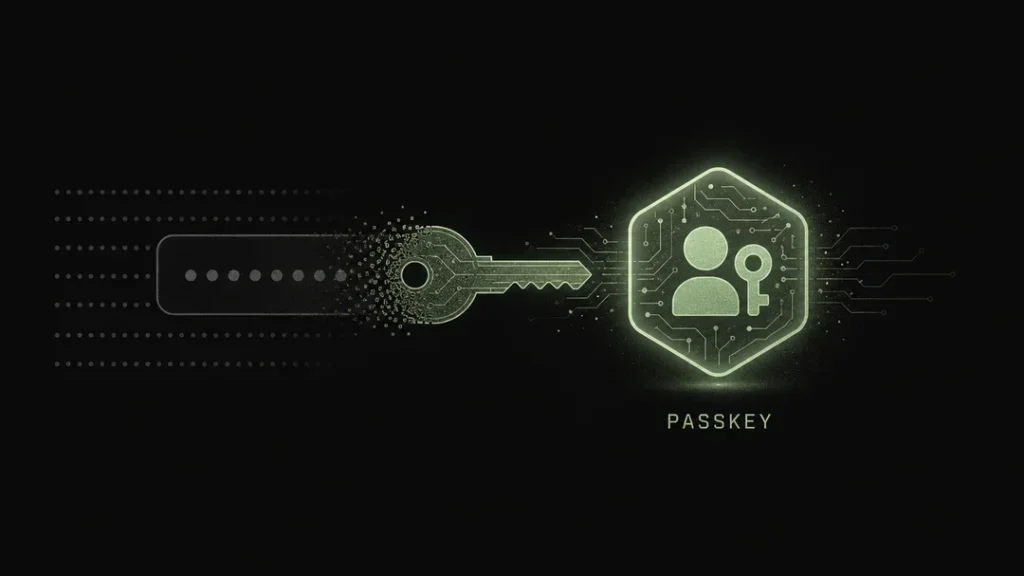
While Google is now aiming to ensure that users’ accounts remain secure by directing its focus towards security services such as its online Security Check-Up and passkey protection, the organisation is directing its users to utilise these security resources instead of their dark web report tool. According to the firm, these security tools provide more precise and practical protective measures.
Security Checkup is an excellent tool for everyone because it examines the security settings of your Google account. The Google Password Manager is useful in managing users’ passwords by providing strong, one-of-a-kind passwords that can be created and stored by it. Another usefulness of these features is that when one of your stored passwords is compromised by hackers, the associated Password Checkup tool notifies you. Google also points users to its “Results about you” tool, which helps you find and request removal of your personal information from Google Search results.
Additionally, Google is now also focused on promoting the use of passkeys for login. Compared to conventional passwords, passkeys are more secure. They aid in thwarting phishing scams. Users are reassured by the firm that it will continue to monitor dark web risks. They intend to develop new technologies to safeguard personal data better. That said, as of September 2026 — seven months after the shutdown — Google has not announced any direct replacement for the Dark Web Report, so there is currently no first-party Google tool that fills the gap.
Dark Web Report Alternatives – What Should You Use Instead?
While Google advises users to switch to its other built-in tools, there are various dark web report alternatives that users can try and replace the Google software with. These alternatives are among the best options available because they help ensure that users’ sensitive information is protected from the dark web. Below is a list of our most recommended alternatives:
| Tool | Free option | Paid price | Continuous monitoring |
|---|---|---|---|
| Have I Been Pwned | Yes — full email alerts | Free for individuals | Yes, email notifications |
| Proton Pass | Yes, but no dark web monitoring | ~$2.99/mo (Pass Plus) | Yes |
| Experian | One free scan + free Basic plan | $24.99/mo (Premium) | Paid plans only |
| Trend Micro ID Protection | Data leak check only | $49.99/yr (Standard) | Paid plans only |
| Bitwarden | Yes — breach report included | $10/yr (Premium) | No, on-demand checks |
| Keeper BreachWatch | No | $19.99/yr + Keeper plan | Yes |
| 1Password | No (14-day trial) | $35.88/yr | Yes, via Watchtower |
Have I Been Pwned
Best for: free, no-cost breach alerts on your email address.
This is a free breach search and notification service that can be accessed via haveibeenpwned.com. It indexes known data breach corpora and stealer logs rather than actively crawling dark web marketplaces, and it notifies you if your email address or phone number turns up in a newly added breach. Note that HIBP is not a password manager — it offers a Pwned Passwords service for checking whether an individual password has appeared in a breach, and it recommends pairing the service with a separate password manager for generating and storing strong, unique passwords.
Proton Pass
Best for: privacy-focused users who want monitoring bundled with a password manager.
This is a dark web monitoring feature built into Proton Pass, which searches breach data for exposed credentials and personal information and alerts you when a match appears. Proton Pass has a free tier, but Dark Web Monitoring requires a paid plan: Pass Plus costs roughly $2.99 per month (about $35.88 annually), while Pass Family is around $4.99 per month. Dark Web Monitoring is also bundled into Proton Unlimited, the full privacy suite, at about $9.99 per month or $119.88 annually.
Experian Free Dark Web Scan
Best for: a one-off check plus optional credit monitoring.
This is a free one-time monitoring tool that can be used as a replacement for the Google dark web report. It allows you to check whether your sensitive information, like email, phone number, and Social Security number, has been compromised and dumped on the dark web. Beyond that free scan, Experian IdentityWorks offers a free Basic plan, a Premium plan at $24.99 per month, and a Family plan at $34.99 per month. The paid versions offer additional services, which include ongoing dark web surveillance, three-bureau credit monitoring alerts, and identity theft insurance.
Trend Micro ID Protection
Best for: existing Trend Micro customers.
Trend Micro ID Protection is a consumer monitoring app that covers the dark web for compromised or leaked data. It has both free and paid versions, but note that the free tier only includes a Personal Data Leak Check — continuous Dark Web Monitoring is a paid feature. The Standard plan costs $49.99 per year (list price $89.99) and the Plus plan is $69.99 per year, both with a 7-day free trial. ID Protection is also included at no extra cost with several Trend Micro security suites, including Maximum Security in the US and Canada.
Bitwarden
Best for: the cheapest paid option, and the most generous free tier.
Bitwarden is an affordable, open-source Google dark web alternative that is mostly used by tech-savvy consumers. Its data breach report is included in the free-forever plan, so you can check whether your email address appears in known breaches without paying anything; the full set of vault health reports requires Premium, which costs just $10 per year. It also offers password management, which helps in creating one-of-a-kind passwords for all of your online accounts. Bear in mind that Bitwarden’s breach checks run when you request them rather than as continuous real-time monitoring.
Keeper BreachWatch
Best for: continuous monitoring of credentials already stored in a vault.
Keeper’s BreachWatch continuously scans your stored credentials against breach databases and dark web marketplaces, alerting you with specific guidance on which credentials to change. It is a paid add-on rather than a standalone free tool: it requires a Keeper plan and costs an extra $19.99 per year for Keeper Unlimited or $39.99 per year for Keeper Family.
1Password
Best for: an all-in-one experience with extras beyond monitoring.
1Password is a high-end, professional manager that prioritises usability and cutting-edge features like Privacy Cards and Travel Mode. Its Watchtower feature checks your saved credentials against Have I Been Pwned’s breach data. Note that Privacy Cards are only available to US residents aged 18 or over with a US checking account and US phone number. For those seeking a smooth, all-in-one experience, it is perfect.
If you want a full identity-protection suite rather than a password manager with breach checks bolted on, we have also tested two of the bigger names in this category: read our Aura dark web monitoring review and our Norton dark web monitoring review before you commit to a subscription.
Conclusion
Although losing a free security tool is always unfortunate, the Google Dark Web Report was frequently regarded as a limited tool in comparison to rivals in monitoring the dark web. If you are currently looking for other options that will offer a better service, we advise you to set up alerts on Have I Been Pwned. It is a free service that indexes known data breaches and stealer logs and notifies you if your email address appears in a new one. Just be clear about what it does and doesn’t do: it will not crawl dark web marketplaces in real time, so pair it with a password manager and, if you want continuous surveillance and identity restoration support, a paid service like Experian IdentityWorks or Keeper’s BreachWatch. And whichever tool you land on, the alert itself is only step one — see what to do if your information is on the dark web for the response plan Google never gave its users.
Frequently Asked Questions (FAQs)
When was the Google dark web report shutdown?
The firm announced that the dark web report tool would cease scanning on the 15th of January, 2026, and on February 16, 2026, the service shut down entirely, erasing all data.
Why was the Dark Web Report discontinued by Google?
According to Google, while the report offered general information, feedback showed that it did not provide helpful next steps for customers to address the exposures it identified.
After the closure, what happened to my data?
All reports and monitoring profiles connected to the Dark Web Report were permanently deleted from Google’s servers on February 16, 2026.
Which Google Dark Web Report substitutes are the best?
Strong substitutes include Have I Been Pwned (HIBP) and the integrated breach reports in password managers like Bitwarden, 1Password and Proton Pass, alongside Experian, Trend Micro ID Protection, and Keeper’s BreachWatch for ongoing breach monitoring.
Does Google have other security tools I can use?
Yes, Google suggests using the Google Password Manager, Password Checkup and Security Checkup to monitor for compromised passwords and account security issues, plus passkeys and the “Results about you” tool.