Billions of records containing people’s data and personal information are in circulation across the dark web, as our dark web statistics roundup for 2026 lays out in detail. Although the dark web is not entirely a den of illegal activities, sensitive information still finds its way there nonetheless. This is most rampant, considering the fact that we exist in an era where data breaches are so common.
Due to the frequent occurrence of data breaches, most internet users and organisations utilise monitoring tools to track and monitor leaked data and customers’ sensitive information, including phone numbers, IP addresses, usernames, Social Security numbers, email addresses, and any other type of sensitive information.
However, one common question arises: what to do if data is on the dark web? This is one of the most asked questions, especially by internet users whose monitoring tool does not provide actionable next steps, for instance, the Google dark web report tool. In fact, before the dark web report was shut down, Google publicly said the reason it killed its tool was that users complained that it didn’t provide helpful next steps.
Nevertheless, to address the question of what to do when you receive an alert of a data breach or a data dump on the dark web, we have put together a step-by-step action guide to help you stay in control in 2026.
In this guide, we will explain what it means to have your information on the dark web, how to check it for yourself, what to do if it appears, and whether or not it can be deleted. Don’t wait for your information to be dumped on the dark web before reading this guide. So, without delay, let’s get started!
What is the Dark Web? – Overview
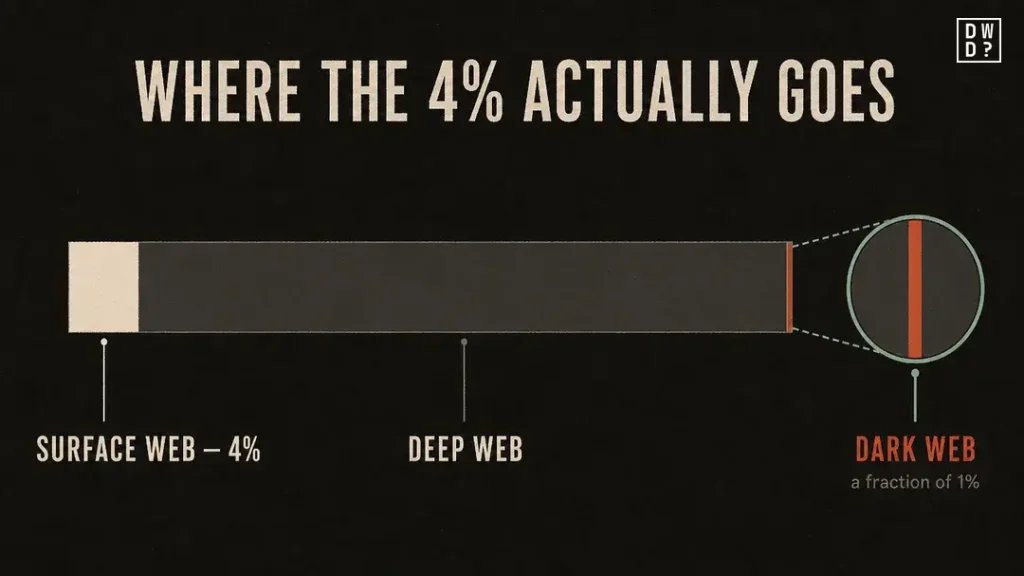
The dark web is a very small portion of the internet that is not indexed by search engines, and you cannot reach it by typing an address into Chrome or Firefox the way you normally would. You’ll often see it claimed that the dark web makes up “4% of the internet,” but that figure actually belongs to the surface web in the well-known iceberg graphic, which we pulled apart layer by layer in our dark web iceberg explainer. In reality, the dark web is a sliver, a fraction of a percent. If the surface, deep and dark distinction is still fuzzy, our deep web vs dark web breakdown is the shorter route to it.
To access it, you need specialised software, such as the Tor browser (which is itself built on Firefox). These browsers are designed specifically to route your traffic through multiple layers of encryption to conceal your identity and location, and if you ever intend to look for yourself, do it the careful way described in our guide on how to access the dark web safely. Although the dark web has legitimate uses, such as secure communication for activists and journalists, a large portion of its activity involves illegal marketplaces where stolen data is a primary commodity. This means that the dark web hosts everything from legitimate forums to illegal marketplaces.
How Does Your Personal Data End Up There?
Before we look at how your data got to the dark web, let’s first look at what it means for your information to be on the dark web. Knowing the implications is important because some personal information is too sensitive to be circulating around the dark web, where hackers and criminals are present in large numbers.
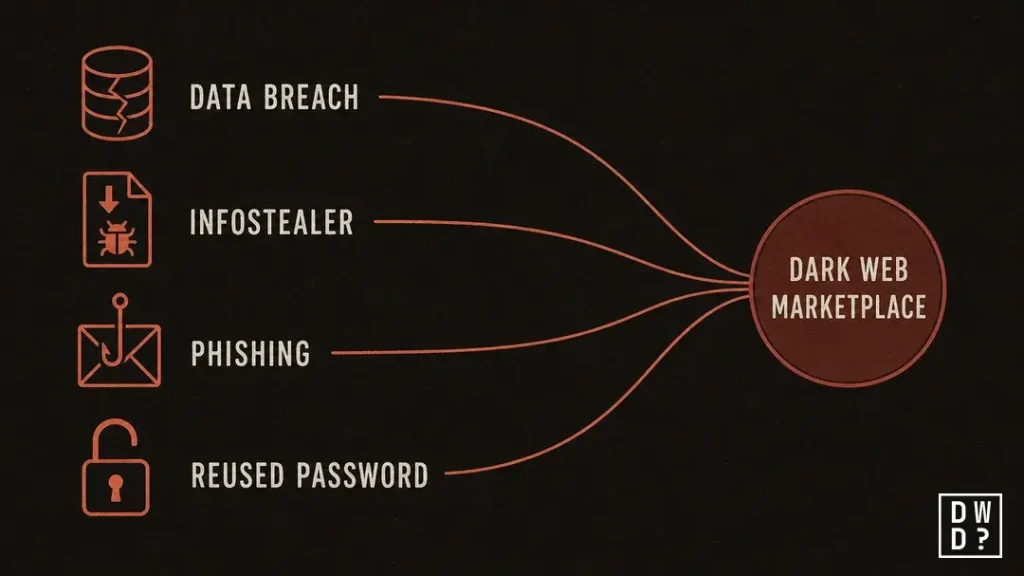
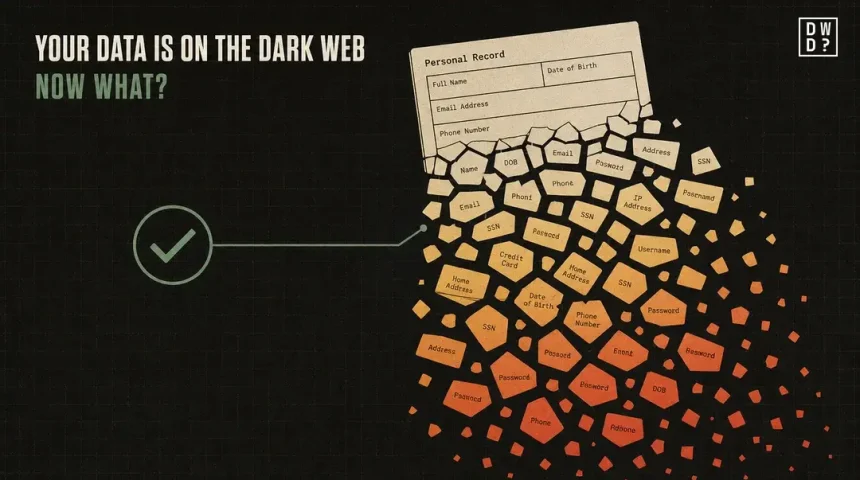
When your information is on the dark web, it indicates that information related to your identity, email address, passwords, financial information, or personal records has been taken from a business or service you used and is currently being traded, bought, and sold by criminals in encrypted forums or marketplaces.
However, this does not mean that you will be targeted right away, but it does indicate that your data is available to those who have the means and will to take advantage of it by exploiting you, stealing your funds, carrying out identity theft, account takeovers, and phishing attacks. Hence, the need to learn how to protect yourself and data from the dark web.
Now to the big question: how did your information end up on the dark web? There are several ways in which this happens. First of all, it is worth noting that your personal and sensitive information cannot miraculously find its way to the dark web—there must be a threat actor or an external factor. However, the two common ways, among many others, are through a data breach and infostealer malware.
Through a data breach, threat actors conduct a cyberattack on a business that keeps your information and that of other customers, and take out a lot of records. After which they transfer it to the dark web, where they either sell them directly or make them public. The T-Mobile breach, which exposed roughly 76 million customers and ended in a $350M settlement, is the textbook version of this.
The second most common approach attackers use is through infostealer malware, a kind of malicious software that will infiltrate your device silently and collect autofill data, session cookies, and saved passwords before transferring them to the dark web. If you want to see what that output actually looks like once it is packaged for sale, we broke down a 4-million-line ULP dump line by line.
Another way by which your personal information can get there is through phishing, where threat actors try to trick you into revealing sensitive information, or through a compromised account, due to weak passwords or reused credentials. Phishing has also become considerably harder to spot now that criminals have purpose-built tools for writing the bait, as we covered in our piece on FraudGPT. Your data can also get to the dark web through accidental leaks due to the often misconfiguration of cloud systems. In either case, the stolen data flows quickly and gets up on dark web marketplaces or forums seamlessly and within a short period.
What Types of Personal Information Are Sold on the Dark Web?
Almost any piece of information that could be used to commit financial fraud, access your accounts, or impersonate you is valuable and can be sold on the dark web. The most popular ones include the following:
- Name, address and phone number, which are frequently offered for sale in large quantities
- Social Security number
- Emails, usernames and passwords
- Dates of birth and residential addresses
- Medical records and account numbers
- Financial account numbers and details
- Driver’s license and passport information
What To Do If Your Information Is Found on the Dark Web? Quick steps
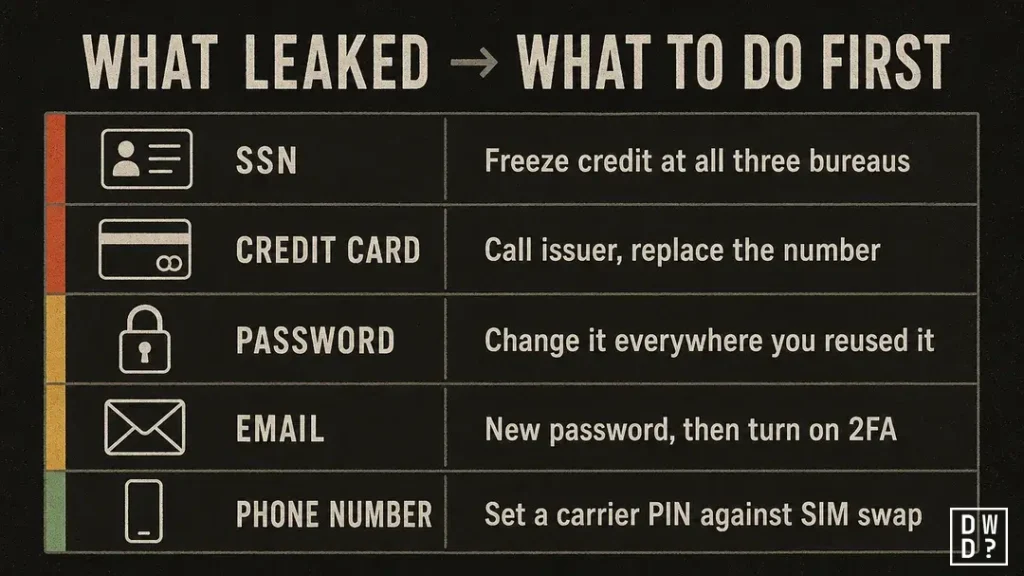
The presence of your personal information on the dark web is a clear indication that you are vulnerable to cyberattacks, including identity theft, account takeover, and financial fraud. The moment you find your information on the dark web, it is crucial to take control by acting as quickly as possible. This will ensure that your exposed data is utterly worthless to criminals.
However, the right step towards taking control of your data depends on the kind of data that was exposed on the dark web. Here is a step-by-step guide tailored to address each type of data that can be leaked online:
1. If Your Email Was Exposed on the Dark Web
If you find out that your email has been exposed on the dark web, it is important that you take action immediately. Because once hackers have access to it, it can lead to critical situations such as phishing and other malicious activities. Here is a step-by-step guide on how to take control once your email details are leaked:
- Change the password on that email immediately
- Enable two-factor authentication
- Change passwords on any other accounts that use the same password
- Check for unknown forwarding rules or filters
- Review recent sent communications for indicators of compromise
- Look out for phishing emails. Hackers may try to trick you into sending sensitive information
2. If Your Password Was Exposed
Exposed passwords can easily lead to account takeover, financial theft and identity theft. Hence, if your password is leaked, the first form of defence against hackers and cyberattackers is to change the password across all accounts as soon as possible. Don’t wait too long before executing this step. In general, here is a step guide:
- Log in to your account and change the password everywhere you used it
- Start using a password manager to generate unique passwords
- Enable 2FA or MFA on every account that supports it
- Ensure the new password is strong and not obvious
- Keep an eye out for unauthorised activities across all accounts
3. If Your SSN Was Exposed, Act Immediately
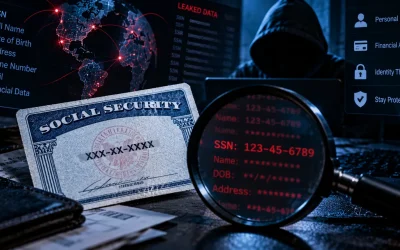
It is a matter of severe concern if your Social Security Number (SSN) is exposed on the dark web. It is important to take a quick safety measure because the presence of your SSN on the dark web means you are vulnerable to identity theft and financial fraud. Your SSN can be used to open new credit lines, file fraudulent tax returns, take out loans and even access medical care under your name and identity. It also sells for almost nothing, which is exactly why it moves so fast, something we covered in Identity Theft And The Dark Web – Your SSN Is Worth $1. The best defence against your leaked Social Security Number (SSN) includes the following:
- Freeze your credit at all three bureaus as soon as possible: Equifax, Experian and TransUnion. It is free at all three
- Request an IRS Identity Protection PIN, and consider placing a fraud alert on your credit file
- Monitor your accounts for any suspicious and unauthorised activities
- You can file a report at IdentityTheft.gov if you suspect that your information has been misused. The FTC will generate a personal recovery plan and pre-filled letters for you
4. If Your Credit Card Was Discovered
It is a serious concern if your credit card details are found on the dark web. A card number on its own won’t let anyone open accounts in your name, that requires your SSN and other identifiers, but it is more than enough for fraudulent charges and card-testing, where criminals run small transactions to see which stolen cards are still live. Here is what to do if your credit card is discovered on the dark web:
- Request a new card number by giving the card issuer a call
- Dispute any fraudulent charges with your issuer
- Examine recent statements closely
- Look for connected accounts; criminals frequently attempt several cards
5. If Your Phone Number and Usernames Were Revealed
During a data breach, phone numbers and usernames are among the most common types of data that attackers steal and dump on the dark web. So, when these types of information are leaked, follow the steps below to protect yourself against cyber attacks:
- Contact your carrier to stop SIM swaps by setting a PIN for your account
- Move your two-factor codes off SMS where you can. An authenticator app or a passkey is far harder to intercept than a text message
- Keep an eye out for attempts at smishing (SMS phishing), which almost always arrives as an urgent security warning about one of your accounts
- Anticipate an increase in spam calls
- Keep an eye on your accounts for any suspicious and unauthorised activities, especially accounts linked to the phone number
How to Check If Your Information Is on the Dark Web
Every internet user can check if their information is out there on the dark web. The most efficient way is by utilising monitoring tools such as Have I Been Pwned. This is a free tool, trusted by many, that helps you check whether your email address has appeared in a known data breach. One thing to know upfront: HIBP is a database of breach collections and infostealer logs that have been submitted to it, not a live crawler of dark web marketplaces. If a particular breach hasn’t been loaded, it won’t show up.
In addition, internet users can utilise legitimate, subscribed monitoring tools. These tools offer advanced monitoring features that you can use to take measures and protect your accounts and identity. Here’s a step-by-step guide on how to check:
- Visit haveibeenpwned.com. You do not need to create an account to run a search.
- Type your email address into the search box and hit the button.
- If your address appears in any loaded breaches, you’ll get a list showing each incident, the date, and what types of data were exposed.
- Review the list, then proceed to taking precautions by changing your login details and enabling two-factor authentication.
- Optionally, sign up for free breach notifications so you’re alerted if your address turns up in a future breach. This step does require verifying your email.
Note that HIBP’s website search now only accepts email addresses. Username and phone number lookups were removed from the public site and only remain available through its API.
Note also that there are various free and paid monitoring tools. Each software, especially the free ones, is limited to monitoring a few types of data. Hence, there is a need to know the type of software available and the kind of information they can track. Most common monitoring software includes the following:
- Have I Been Pwned – Free
- Mozilla Monitor (formerly Firefox Monitor) – Free
- Experian Dark Web Scan – Free one-time scan
- NordPass Data Breach Scanner – Premium
- Norton – Paid
- Aura – Paid
- Identity Guard – Paid
We’ve put the paid services through the same test in our monitoring tool reviews, and the short version is that none of them can do anything a free scan plus a credit freeze can’t. What you’re paying for is the alerting and the insurance, not removal.
How To Remove Exposed Personal Information From The Dark Web? Harsh Truth
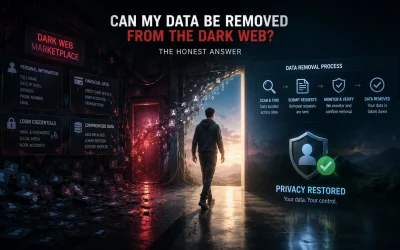
While billions of people’s personal information is circulating across the dark web, it is unfortunate that it is impossible to totally remove the information from the internet. This contradicts what many people believe. Hence, the best approach is to take proactive steps to ensure you have control over your data.
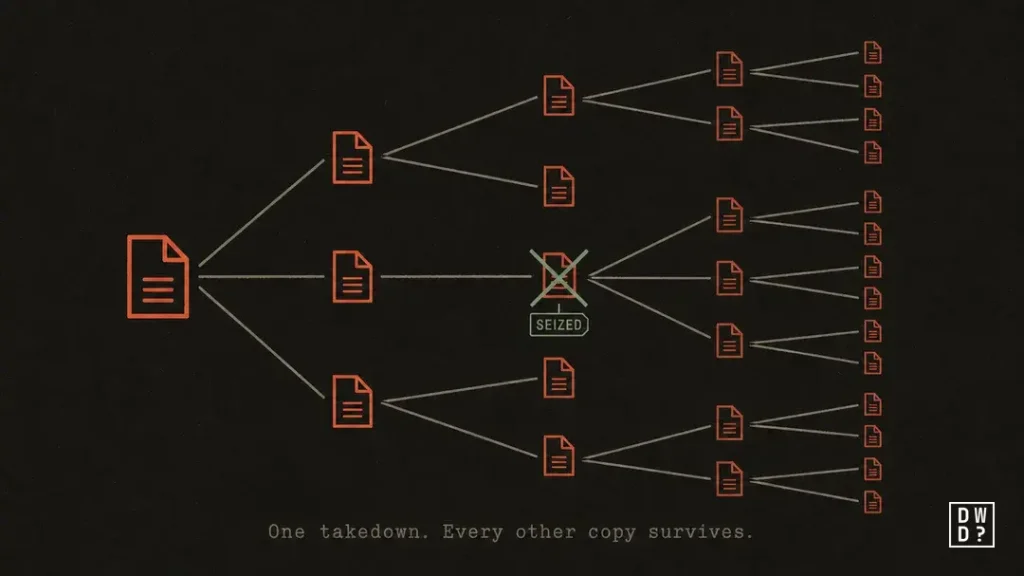
Most internet users believe that once personal information and identifiers have been dumped on the dark web, it is possible to remove them from there. This would have been the most proactive measure to take when personal information is found on the dark web. Unfortunately, it is nearly impossible.
Monitoring tools can only alert you to data dumps on the dark web; they cannot erase the information from the web. The implication of this is that once data is stolen and dumped on the dark web, it is impossible for the tools to remove the data from the dark web marketplaces, forums, or dump sites.
One possible way in which personal information on the dark web can be erased is by taking down the dump sites as a whole. These takedowns are mostly law enforcement operations. Genesis Market, which sold stolen credentials and browser session data, was seized in an international operation in April 2023, and the data breach forum BreachForums has been seized and taken offline more than once.
However, site takedown doesn’t guarantee that your data has been completely wiped out of the dark web. This is because it takes a lot of time before the sites can be tracked and dismantled. During this process, the stolen data may have been circulated across various dark forums and websites. Hence, there is no guarantee that all copies have been removed.
How to Protect Yourself from Dark Web Risks
Here are some of the best practices to ensure you and your data are safe from the dark web:
- Secure your account with a strong password that can’t easily be guessed
- Do not repeat passwords across various accounts. Repetition of words can lead to vulnerability
- Switch to passkeys wherever they’re offered. There’s no password to steal, so a breach at the service can’t hand anyone your login
- Limit the amount and kind of information you share online
- Regularly clean up your cookies and adjust your browsing habits
- Use the dark web monitoring tools to help identify compromised information
- Stay vigilant and look out for potential scams like phishing and smishing. Our scam alert database tracks the ones currently in circulation
- Set up Two-Factor Authentication (2FA) or Multi-Factor Authentication (MFA)
- Always look out for unauthorised activities and take necessary steps immediately to take control
- Avoid oversharing of personal and sensitive information. Do not trust everyone!
- Only share details with trusted apps, websites and software
- If things get out of hand, report the case to the law enforcement agencies, or you can file a report with your local police, or with the FBI’s Internet Crime Complaint Center (IC3)
In conclusion
While there are proactive measures to take in order to defend yourself against hackers and cybercriminals, it is worth noting that a data breach cannot be reversed. And once the data finds its way to the dark web, it is impossible to completely erase the data from there. This means that copies of your information will continue to circulate indefinitely once it is on the dark web.
You can, however, take proactive measures to eliminate its potential damage. But handling these processes by hand might be taxing, especially without monitoring tools. Hence, we recommend registering for legitimate dark web monitoring tools like Have I Been Pwned for more effective monitoring and taking advantage of its data dump alert. It also helps to know when a breach has actually happened, which is what our data breach tracker is for.
Frequently Asked Questions (FAQs)
Should I be concerned if my information is on the dark web?
Well, you should be concerned because having your personal information on the dark web can be extremely dangerous. It’s normal to feel anxious, though, but don’t panic; it won’t benefit you. Rather than panic, take a proactive step by securing your accounts and information as soon as you receive the alert. If you take timely measures, you will be safe.
If my personal information ends up on the dark web, what should I do first?
What you should do depends on the type of data that has been compromised. Nevertheless, here is a general approach to stay in control of your data and personal information:
- You should immediately change the password for all exposed accounts
- Make sure you only use strong, one-of-a-kind passwords
- Turn on MFA or 2FA for every account
- Sign out of all active sessions on every device. This invalidates any session cookies that have already been stolen, so a hacker holding one can’t stay logged in as you
- Freeze your credit at all three bureaus, and contact your card issuer separately to lock or replace any exposed card
- Check for infostealer malware on your computer and gadgets
- Report any fraud activity to the law enforcement agents
How much does it cost to monitor the dark web?
The cost of dark web monitoring tools depends on the type of software you want to use. There are free and paid software that are designed to monitor users’ personal information across the internet, including the dark web. However, you can get dark web monitoring services from a range of $0 to over $30 per month.
Note that simple notifications concerning data breaches that you might want to use are provided by free services, and for more comprehensive service and extra perks, you will need to upgrade to a premium software. Our reviews of Aura and Norton break down what each tier actually buys you.
Can my data reappear after a site has been taken down?
Yes. The same information may reappear on another illicit platform even after a marketplace, forum, or dump site is shut down. Additionally, data may resurface when older breach collections are shared again or merged with more recent thefts.
Is it possible to remove my information from the dark web?
No. There is no realistic way to remove every copy of your data once it has been duplicated, sold, and reposted on numerous underground forums and leak sites. Although law enforcement actions can occasionally remove particular posts or websites, there is no guarantee that your data has completely been wiped out.