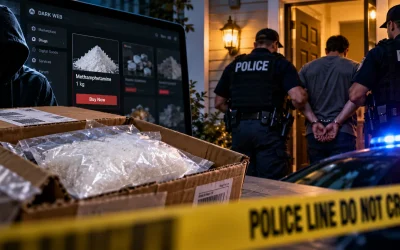
Aaron Silva, 27, of Manchester, New Hampshire, was sentenced to 72 months (six years) in federal prison on October 27, 2026 for buying methamphetamine on the dark web and having it mailed from California to his home for redistribution to local customers. The US Postal Inspection Service identified suspicious packages in 2023, placed him under surveillance, and arrested him after a traffic stop. The investigation was led by USPIS and the DEA with assistance from the New Hampshire State Police.
How the Postal Inspection Service Found Him
The US Postal Inspection Service doesn’t just deliver mail. It also watches for it.
In 2023, USPIS inspectors in the Boston Division identified suspicious packages being sent from California to Silva’s address in New Hampshire. The specific details of what flagged the packages haven’t been disclosed publicly , postal inspectors typically use a combination of package characteristics, weight, return address patterns, and intelligence feeds to identify likely drug shipments. Dark web drug vendors shipping by mail often use fake return addresses, particular packing methods, and specific box sizes that experienced inspectors learn to recognize.
Once the packages were flagged, investigators didn’t just intercept them. They watched. They placed Silva under surveillance and waited for him to go collect a shipment. When he did, they pulled him over in a traffic stop.
What happened next removed any doubt about what was happening. After his arrest, Silva admitted that he had ordered methamphetamine through the dark web and received it through the mail. He also admitted he wasn’t buying it just for himself. He planned to redistribute it to his own customers in New Hampshire.
US Attorney Erin Creegan put the outcome plainly: “Meth is a highly addictive substance that has caused extensive damage in New Hampshire communities , we will continue disrupting distribution networks for those who traffic in these substances and putting defendants such as Mr. Silva behind bars.”
The Dark Web and Mail Combination
The method Silva used , buying drugs through an anonymous dark web marketplace and having them shipped through regular postal channels , is one of the most common drug trafficking models investigators are now dealing with across the northeastern United States.
The logic is straightforward. Dark web drug marketplaces allow buyers and sellers to transact without ever meeting in person. Sellers use fake return addresses, specialized packaging, and vacuum sealing to try to defeat inspection. The buyer receives a package that, from the outside, looks like any other piece of mail.
For buyers like Silva, this feels safer than street-level purchases. There’s no physical exchange, no face-to-face contact with a supplier, and no visible criminal network connecting buyer to seller. It feels like online shopping.
It comes with a major vulnerability. The postal system is a federal network. The US Postal Inspection Service is a federal law enforcement agency with specific legal authority to investigate drug trafficking through the mail. As USPIS Boston Division Acting Inspector in Charge Justin Page stated: “Postal Inspection Service aggressively investigates dark web activity that involves the shipment of illegal narcotics.”
The combination of mail tracking, package flagging, and surveillance has produced a steady stream of prosecutions in New Hampshire specifically. Silva’s case was brought under New Hampshire’s Homeland Security Task Force, which coordinates federal and state agencies on exactly this type of case.
We’ve covered the broader dark web drug trafficking ecosystem in looking at Empire Market , the $430 million dark web drug marketplace whose operators received 40-year sentences earlier this month. Empire Market ran from 2018 to 2020. Silva’s packages arrived in 2023 , likely through successor platforms built on the same model. The operators go to prison. The platforms rebuild. The mail route continues.
New Hampshire as a Target State
New Hampshire consistently ranks among the states with the highest drug overdose death rates per capita in the United States. Methamphetamine is one of several controlled substances driving that toll, and its arrival through dark web mail orders represents a specific challenge for state and federal law enforcement.
The California-to-New-Hampshire route that appeared in Silva’s case is not unique to his situation. Multiple prior USPIS cases in the district show similar patterns: California or Arizona-based dark web suppliers shipping to New Hampshire recipients who plan to redistribute locally. USPIS’s Boston Division, which covers New England, has pursued a series of these cases over the past several years.
Just days ago, a separate case in the same jurisdiction demonstrated the same dynamic: an Arizona woman pleaded guilty to shipping methamphetamine to New Hampshire in a multi-state dark web drug trafficking by mail operation. Her sentencing is scheduled for December 17, 2026. The two cases share an investigation agency (USPIS), a state (New Hampshire), and a drug (methamphetamine). They are separate prosecutions of what appears to be a persistent regional trafficking pattern.
This is precisely the type of criminal supply chain that dark web drug marketplace takedowns struggle to fully disrupt , shutting down one platform pushes buyers and sellers to the next, while the postal route remains functional until a specific shipment is flagged.
The Sentence and What Comes Next
Silva’s 72-month sentence falls at the mandatory minimum end of what was possible. Federal law sets a mandatory minimum of five years for possession with intent to distribute 50 grams or more of methamphetamine, with a maximum of 40 years. The judge’s 72-month sentence reflects a specific assessment of his conduct and cooperation.
The five years of supervised release that follow his prison term extends the government’s oversight significantly. Supervised release carries conditions , drug testing, restrictions on association with other drug offenders, restrictions on travel and violations can result in additional prison time.
The investigation that caught Silva came from 2023, meaning it took approximately three years from package identification to sentencing. That timeline reflects the full weight of the federal prosecution process: evidence gathering, charges, plea negotiations, and finally sentencing.
The case was led by the US Postal Inspection Service and the DEA, with assistance from the New Hampshire State Police. It was prosecuted by the US Attorney’s Office for the District of New Hampshire.
Why “Just Buying” Is Still Distribution
One detail in this case is worth making explicit because it comes up repeatedly in dark web drug prosecutions.
Silva wasn’t a major trafficker in the sense of importing large quantities across international borders or running a sophisticated criminal network. He was a retail-level buyer who was redistributing to local customers. Federal law doesn’t draw a meaningful distinction between the two when it comes to drug conspiracy and possession-with-intent charges.
As we’ve covered in looking at how dark web drug platforms create layered supply chains , marketplace operators at the top, vendors in the middle, and retail distributors like Silva at the bottom , each layer of the supply chain carries its own criminal liability. The marketplace operators face decades. The local distributors face years.
For anyone whose information suggests they may be at risk from drug-related activity in their community, the DEA’s tip line accepts anonymous reports. USPIS also has a mail theft and drug mail reporting portal for suspicious packages.
Frequently Asked Questions
Who is Aaron Silva?
A 27-year-old man from Manchester, New Hampshire, sentenced to six years in federal prison on October 27, 2026 for buying methamphetamine on the dark web and having it shipped to his home from California with plans to sell it locally.
How did police catch him?
The US Postal Inspection Service flagged suspicious packages being sent from California to his New Hampshire address in 2023. Investigators placed him under surveillance and pulled him over in a traffic stop after he went to collect a shipment.
What charge was he convicted on?
Possession with intent to distribute 50 grams or more of methamphetamine. He admitted to buying the drug on the dark web, receiving it through the mail, and planning to redistribute it to his own customers.
How long is the sentence?
72 months (six years) in federal prison followed by five years of supervised release.
Is buying drugs on the dark web and reselling them locally still a federal crime?
Yes. Federal law treats possession with intent to distribute the same regardless of how the drugs were acquired , whether through street-level dealing or a dark web purchase intended for redistribution.