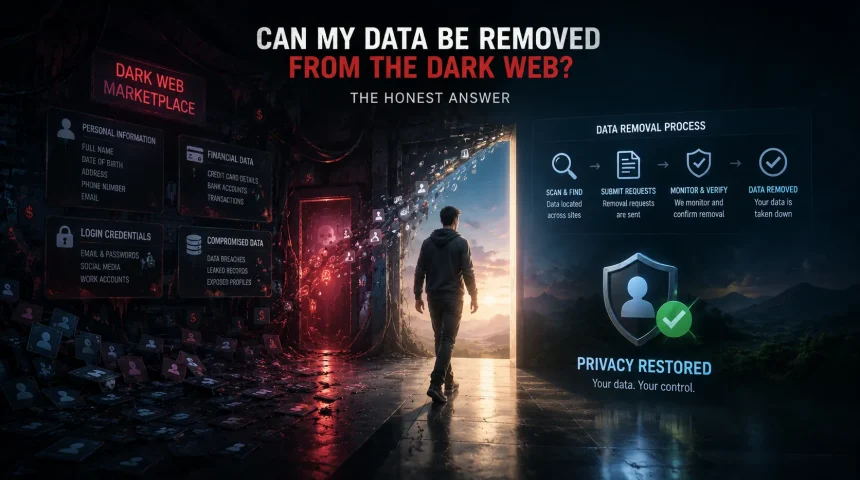
Are you wondering if your data can be removed from the dark web?
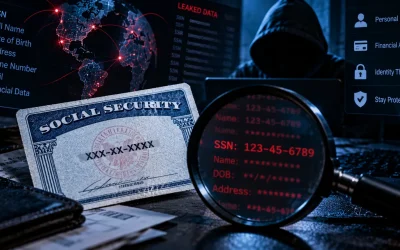
No. Once something you own, your email, your password, your Social Security number, ends up on the dark web, there’s no button anyone can press to erase it. Not you, not a company you pay, not even the government. But that’s not actually the end of the story, and it’s not as hopeless as it sounds either.
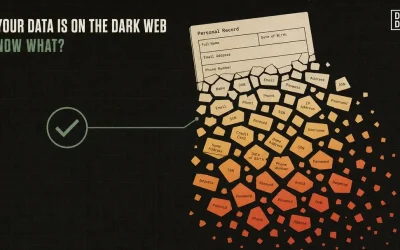
You can’t remove data from the dark web once it’s been posted there. It gets copied across forums and marketplaces within hours, and there’s no central owner to request a takedown from. What you can do instead is make that data useless, changing passwords, freezing your credit, and monitoring for new exposure, so a leak that already happened stops being able to hurt you.
Why You Can’t Really Delete Yourself From the Dark Web
A normal website has an owner you can contact. A dark web forum usually doesn’t work that way. The people running it aren’t interested in your removal request, and even if one specific listing did disappear, dozens of other people may have already copied it onto their own drives, forwarded it in a private channel, or repackaged it into a bigger dump for resale.
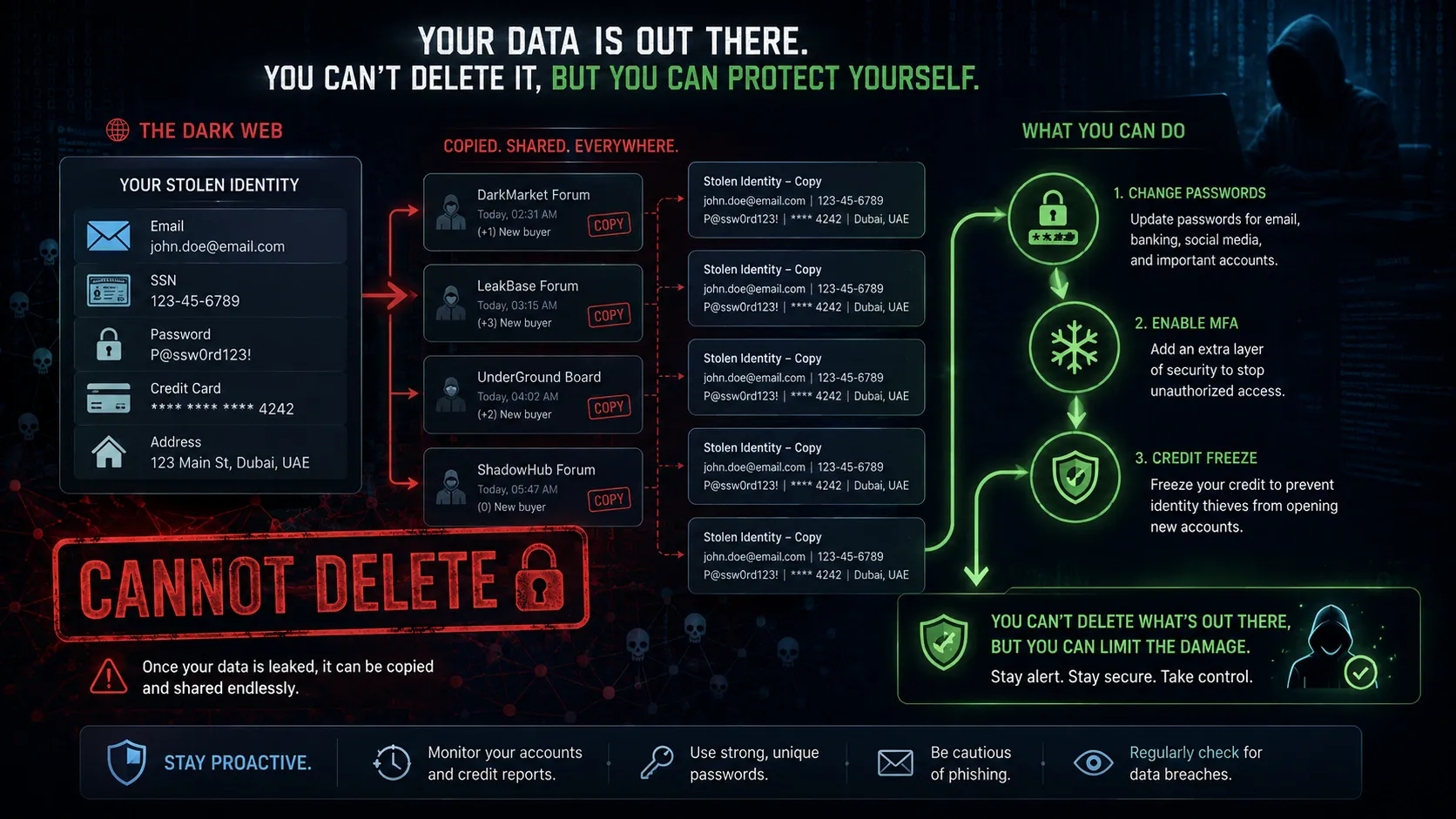
This is really a numbers problem more than a technical one. Once your information is in a breach dump, there’s no realistic way of finding and deleting every copy of it. Anyone claiming they can fully erase your data from the dark web for a fee is selling you something they can’t actually deliver.
That’s genuinely frustrating to hear, but it also means you can stop wasting energy chasing something impossible and focus on what actually reduces your risk.
Also Read: What To Do If Your Information Is on the Dark Web
Should I Be Worried If My Information Is on the Dark Web?
Your information being somewhere on the dark web is a lot more common than most people assume, and it doesn’t automatically mean disaster is coming.
According to the Identity Theft Resource Center, 2025 alone saw over 3,322 data compromises publicly reported data breaches, affecting close to 278,827,933 people in the US. If you’ve had an email address for more than a few years, there’s a real chance some piece of your information has shown up in a breach at some point, often without you ever knowing.
What actually matters is what type of data is exposed, not just that it’s exposed. An old password from a forum you haven’t used since 2016 is a low-stakes problem you can fix in thirty seconds. Your Social Security number sitting next to your full name and address is a different situation entirely, since that combination can be used to open accounts in your name.
So the honest answer is: take it seriously, but don’t panic just because a scan turned something up. Figure out exactly what was exposed first, then match your response to how sensitive it actually is.
How to Remove Your Information From the Dark Web (What Actually Works)
Since actual removal isn’t on the table, this is really about damage control, done in the right order.
Can I Remove My Email From the Dark Web?
No, not the copy that’s already out there. What you can do is make that specific exposure irrelevant. Change the password on the affected account immediately, and check whether you’ve reused that same password anywhere else, since that’s the single biggest way one leak turns into five. Turn on two-factor authentication for the email account itself, since email is usually the master key attackers use to reset everything else you own.
What Do I Do If My Information Is on the Dark Web Right Now?
Figure out what was exposed, then work through securing accounts, credit, and identity in that order Change passwords, enable two-factor authentication everywhere it’s offered, and if a Social Security number or financial details were part of the leak, freeze your credit with Equifax, Experian, and TransUnion. It’s free, reversible, and it’s one of the few genuinely effective tools available to an individual.
If you want the full, step-by-step walkthrough of this part, including exactly how to freeze your credit, report to the FTC, and watch for follow-up scams, we’ve laid that out in detail in our guide on what to do if your data is on the dark web. No need to repeat the whole checklist twice.
How to Protect Your Information From the Dark Web Going Forward
Removing personal information from dark web listings isn’t possible after the fact, but you can shrink how much ends up there next time. A few things that genuinely move the needle:
- Use guest checkout when you can. Every account you create is one more database that can eventually get breached.
- Opt out of data broker sites. These aren’t the dark web, they’re legal, public data-selling sites, but scammers use them to fill in gaps around whatever was leaked elsewhere. Services like Optery and Privacy Bee automate the opt-out process across hundreds of these sites at once.
- Use a password manager. Reused passwords are the main reason one small leak becomes a much bigger one.
- Give fake details to accounts that don’t need real ones. A discount-code signup or a one-off newsletter rarely needs your real birthday or address.
None of this guarantees you’ll never appear in a breach again. It just shrinks the target.
Can the FBI (or Anyone) Actually Reach the Dark Web?
This one gets asked a lot, and the honest answer sits between “no one can touch it” and “law enforcement sees everything,” which is closer to the truth than either extreme.
Tor, the network the dark web runs on, does genuinely make it hard to trace a specific person just from their browsing activity. But law enforcement doesn’t usually need to break that anonymity technically. Most major dark web takedowns come from old-fashioned investigative work: an operator makes a mistake, undercover agents pose as buyers or sellers, or a server gets seized because it was misconfigured somewhere along the way.
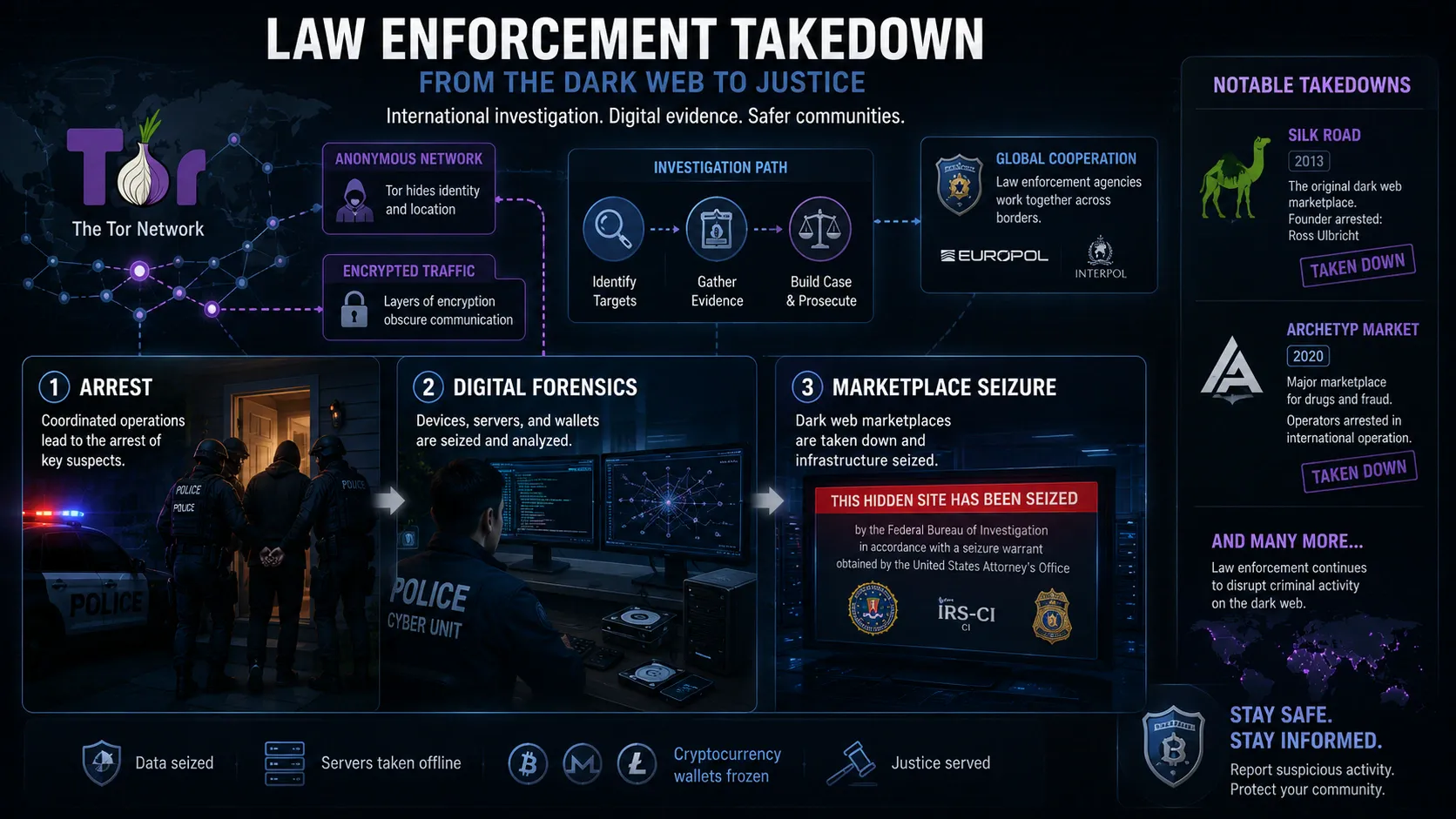
That’s exactly how one of the biggest cryptocurrency laundering services on the dark web came down earlier this year. AudiA6, a service that laundered hundreds of millions in ransomware proceeds, wasn’t cracked through some clever technical exploit. The case started with an unrelated arrest in Poland, and digital forensics on that one person’s devices eventually led investigators to the operators. Similar stories run through past takedowns like Silk Road and, more recently, Archetyp Market, a drug marketplace with over 600,000 users that European authorities dismantled in 2025.
So yes, the FBI and its international partners genuinely can and do reach into the dark web, and have taken down entire marketplaces and laundering services. What they can’t do is retrieve your specific leaked password from a random forum post just because you asked. Their focus is on catching the people running criminal operations, not on data removal for individual victims.
Deep Web vs Dark Web: Which One Is Actually Worse?
They’re not really comparable in the way the question implies.
The deep web is just anything search engines don’t index: your email inbox, your online banking portal, your company’s internal drive, a paywalled article. It’s enormous, mostly boring, and almost entirely legitimate. You use the deep web every single day without thinking about it.
The dark web is a specific, much smaller slice that requires special software like Tor to reach, and it’s deliberately hidden rather than just unindexed. It’s not illegal by itself, but the anonymity it offers has made it a natural home for marketplaces and forums that couldn’t survive in the open.
So “worse” depends on what you’re measuring. By sheer size, the deep web is far bigger and you interact with it constantly with zero risk. By concentration of illegal activity, the dark web carries a much higher share of genuinely dangerous content relative to its size. Neither one is inherently something to fear, they’re just structured very differently, and knowing the difference helps you stop assuming every hidden corner of the internet is equally risky. If you want the full breakdown, our deep web vs dark web guide goes through it layer by layer.
Frequently Asked Questions
Is it possible to remove my data from the dark web?
No. Once information is posted, it’s copied across forums and marketplaces almost immediately, and there’s no central authority to request a takedown from. You can secure and monitor your information, but you can’t erase the original copy.
Can the FBI track the dark web?
The FBI and international partners have dismantled numerous dark web marketplaces and laundering services, usually through investigative work rather than breaking Tor’s anonymity directly. That said, tracking down and removing one specific individual’s leaked data isn’t something law enforcement does for private citizens.
What to do if your data is leaked on the dark web?
Change any affected passwords, enable two-factor authentication, and freeze your credit if a Social Security number or financial information was involved. Report identity theft to the FTC at IdentityTheft.gov if you suspect misuse.
What is worse, deep web or dark web?
They’re not directly comparable. The deep web is enormous and mostly ordinary (email, banking, anything not indexed by search engines). The dark web is much smaller but carries a far higher concentration of illegal marketplaces and forums relative to its size.